By AmandaJune 25, 2018
 Regular readers of JI may remember a post that I wrote a few years ago about Joseph F. Smith’s beheading of a cat.
It was a fun post to write and remains one of my favorite posts that I wrote during my time at JI. I recently discovered, however, that Joseph F.’s hatred of cats may have been a family trait.
I am currently researching the life and thought of Ina Coolbrith, who was a first cousin of Joseph F. Smith and California’s first poet laureate. She hid her connection to the Mormon community as an adult but was a frequent correspondent with the Smith family. One newspaper even suggested that Joseph F. Smith may have proposed marriage to her.
Continue Reading
By AmandaAugust 17, 2016
 It’s almost eleven o’clock in the evening right now, and both of my daughters are in bed. The youngest, a baby about three months old, conked out hours ago. The older one was a bit harder to put to bed. She insisted that she didn’t want a bath and, like many three year olds, begged to have the light left on when she crawled into bed. My husband did the work of reading to her and cuddling with her until she fell asleep. I, on the other hand, was working on a syllabus that is now months overdue.
A few days ago, I saw a post on Facebook breaking down the ethnicity and gender of the current professoriate. According to the post, there were
176,485 full professors in the United States.
72% of these positions were held by white men.
Continue Reading
By AmandaJune 23, 2016
Western Association of Women Historians
49th Annual Conference at the Town & Country Resort
San Diego
April 27-29, 2017
Call for Papers
The Western Association of Women Historians (WAWH) invites proposals for panels, roundtables, posters, workshops, and individual papers in ALL fields, regions, and periods of history. The program committee especially invites proposals with gender, generational, geographic, racial, and institutional diversity in regard to panel content and/or panel composition. This year we are particularly interested in panels that focus on women and public life, including women’s engagement in politics, reform movements, and other efforts to spur social change, as well as women?s ever-evolving place in the workforce. We also welcome panels on public history, academic publishing, and alternative career paths for historians, as well as panels on issues relevant to women and adjuncts in academia today. Finally, we would especially like to encourage Canadian and Mexican historians to apply, as we hope in coming years to become more representative of Western North America as a whole. Priority will be given to proposals for complete sessions, but individual papers, or two papers submitted with a suggested theme, will be incorporated where possible.
Continue Reading
By AmandaMay 18, 2016
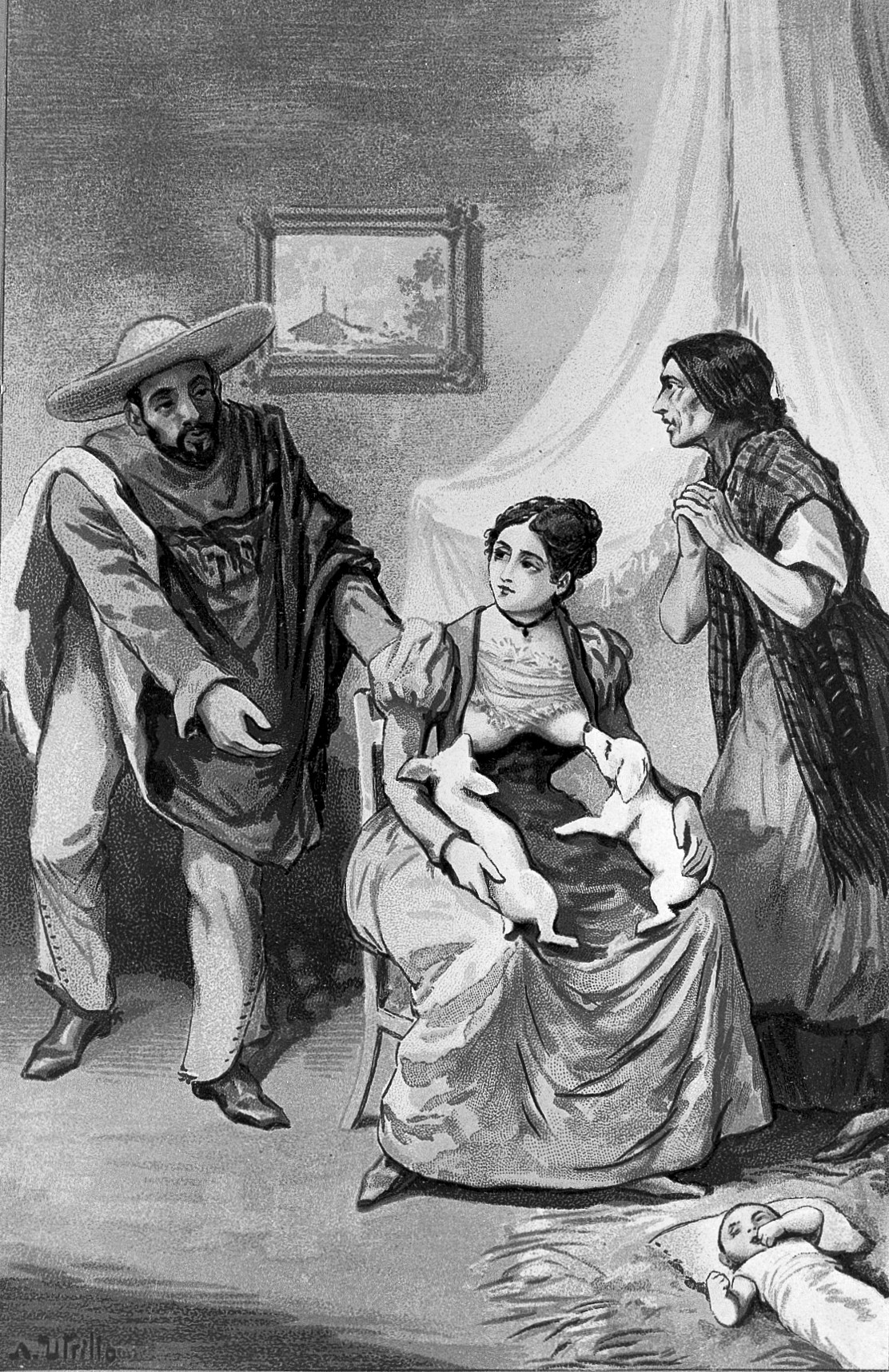 After discovering claims that Indian women breastfed beavers, I become interested in whether or not other stories existed about women breastfeeding animals. I first continued my search for Indian women breastfeeding and discovered several stories in which Indian women had suckled deer, bears, and other animals. As I was searching, however, I came across a number of instances where white doctors recommended that their patients breastfeed animals in order to reduce engorgement or to toughen the nipple. In 1687, for example, a Dutch physician named Paul Babette suggested that engorged breasts could be “cured in one days space with [a] compound Ointment of Marshmallows” if “the wary matter” was “suck[ed] out by a Woman or Whelp.” In 1734, Richard Wiseman reiterated the suggestion that women whose breasts were too full with milk find a “neighboring woman,” some “young Whelps,” or an “instrument” she could use herself to empty them. In 1847, William Dewees went further than recommending that women use puppies if their breasts were engorged and suggested that women could improve their breastfeeding experience
Continue Reading
By AmandaMay 3, 2016
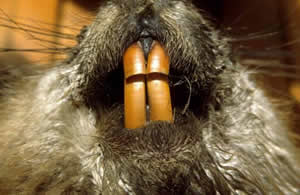 A few years ago at the annual meeting of the Mormon History Association, I asked a question about how Mormons viewed Native American polygamy and sexuality. The answer from the panel was that very little work had been done on that area. I meant to answer that question in my dissertation but ended up shelving it. This semester, as I was revising my dissertation into a book manuscript, I decided to spend a significant amount of time reading nineteenth-century Utah newspapers in order to determine whether or not the practice of Mormon polygamy changed how Mormons viewed Native American sexuality.
I’m not done with that bit of research yet, but as I was working on it, I came upon this fascinating piece of evidence.
On May 9, 1884, The Salt Lake City Herald published an article called Beaver Kittens, which spent a great deal of time discussing the lives and habits of baby beavers. Contained with the article was the following paragraph, which accuses Native American women of breastfeeding beavers:
Continue Reading
By AmandaJanuary 13, 2016
A few weeks ago, I found an entry in the Church History Library about an Indian woman who had adopted a white child. There was almost no information about the document in the library catalog. I immediately asked for it to be digitized but questions about the location of the original document meant that it was impossible for it to put online. I eventually asked Joseph Stuart, a Ph.D. student at the University of Utah to look at it for me.
Here’s the summary he provided:
Continue Reading
By AmandaJuly 27, 2015
This is the eleventh installment of the first annual JI Summer Book Club. This year we are reading Richard Bushman?s landmark biography of Mormonism’s founder, Joseph Smith: Rough Stone Rolling (New York: Alfred A. Knopf, 2005). JI bloggers will be covering small chunks of the book in successive weeks through the summer, with new posts appearing Monday mornings. We invite anyone and everyone interested to read along and to use the comment sections on each post to share your own reflections and questions. There are discussion questions below.
Installments:
- Part 1: Prologue, Chapters 1-2
- Part 2: Chapters 3-4
- Part 3: Chapters 5-6
- Part 4: Chapters 7-9
- Part 5: Chapters 10-12
- Part 6: Chapters 13-15
- Part 7: Chapters 16-18
- Part 8: Chapters 19-21
- Part 9: Chapters 22-24
- Part 10: Chapters 25-26
- Next Week: Chapters 29 – 30
We are nearing the end of Rough Stone Rolling adventure. Since this series is intended for non-academics, I have tried to keep my summaries short and free of academic jargon. I am sure I have failed to do so, and for that I apologize.
Chapter 27
Richard Bushman begins this section by remarking upon the boisterousness of Joseph Smith. He describes him as a man who would frequently boast of his abilities, calling himself a lawyer or a doctor.
Continue Reading
By AmandaJune 29, 2015
Last Friday, the Supreme Court ruled that state restrictions on same sex marriage were unconstitutional. Their reasoning pointed to the importance of establishing a uniform understanding of marriage across the United States so that individuals who were legally married in one state would be assured their relationship would be recognized if they moved to another one. The reaction on my Facebook feed has been jubilant.
One friend wrote: SO MANY RAINBOWS. SO MUCH HAPPY.
Another posted a row of rainbow hearts.
And finally, a third posted a picture of her brother with his new husband, a marriage certificate, and the words: “Today brings joy to my heart. #lovewins”
Continue Reading
By AmandaJune 16, 2015
I am currently working on a mapping project at the University of Michigan focused on sexual crime in nineteenth-century Utah. Every day, I look through the index of the Third District Court Criminal Case files. The cases included in the index (which is available through ancestry.com) covers the years, 1882 – 1916. I still have a long ways to go with the project, but I thought I would share some preliminary thoughts.
Continue Reading
By AmandaMay 21, 2015
For this roundtable, I was asked to give my reactions to the last two chapters: Reeve’s chapter on Mormons and Orientalism and the conclusion. I also want to provide a few thoughts in summation. I’ll try to keep the post relatively brief.
As I was reading the book, one of the things that occurred to me is that the real meat of the book lies in the chapters on Native Americans and African Americans. I agree with previous posters that Reeve has done some excellent work thinking about the racialization of Mormons affected Mormonism’s internal racial politics. At times, however, I found Reeve’s discussion of the conflation between Native Americans and Mormons unsettling. At times, he seemed to be suggesting that the creation of a Missouri county for Mormons was the same as Indian Reservations. Like Christopher Smith, I found myself wanting Reeve to add a reminder that white Mormons retained access to certain rights that other groups did not. They did so because of their skin color.
Continue Reading
Older Posts
Recent Comments
Glen Larson on CFP: Book of Mormon: “Please add me to your mailing list. Thanks”
Mark Staker on Legacies in Mormon Studies: “Jenny was always generous in sharing her knowledge. She was not only an exceptional educator (who also taught her colleagues along the way), but she…”
Gary Bergera on Legacies in Mormon Studies: “Jenny's great. Thanks for posting this.”
Kathy Cardon on Legacies in Mormon Studies: “I worked in the Church's Historical department when Jenny was in the Museum. I always enjoyed our interactions. Reading this article has been a real…”
Don Tate on Legacies in Mormon Studies: “Very well done and richly deserved! I am most proud of Jenny and how far she has come with her life, her scholarship, and her…”
Ben P on Legacies in Mormon Studies: “My favorite former boss and respected current historian!”